 English
 Dansk
Dansk Deutsch
 English
 Español
 Français
 Hrvatski
 Italiano
 Magyar
 Nederlands
 Norsk
Norsk Polski
 Română
 Slovenský
 Slovenščina
 Suomi
Suomi Svenska
 Čeština
 Ελληνική
 Български
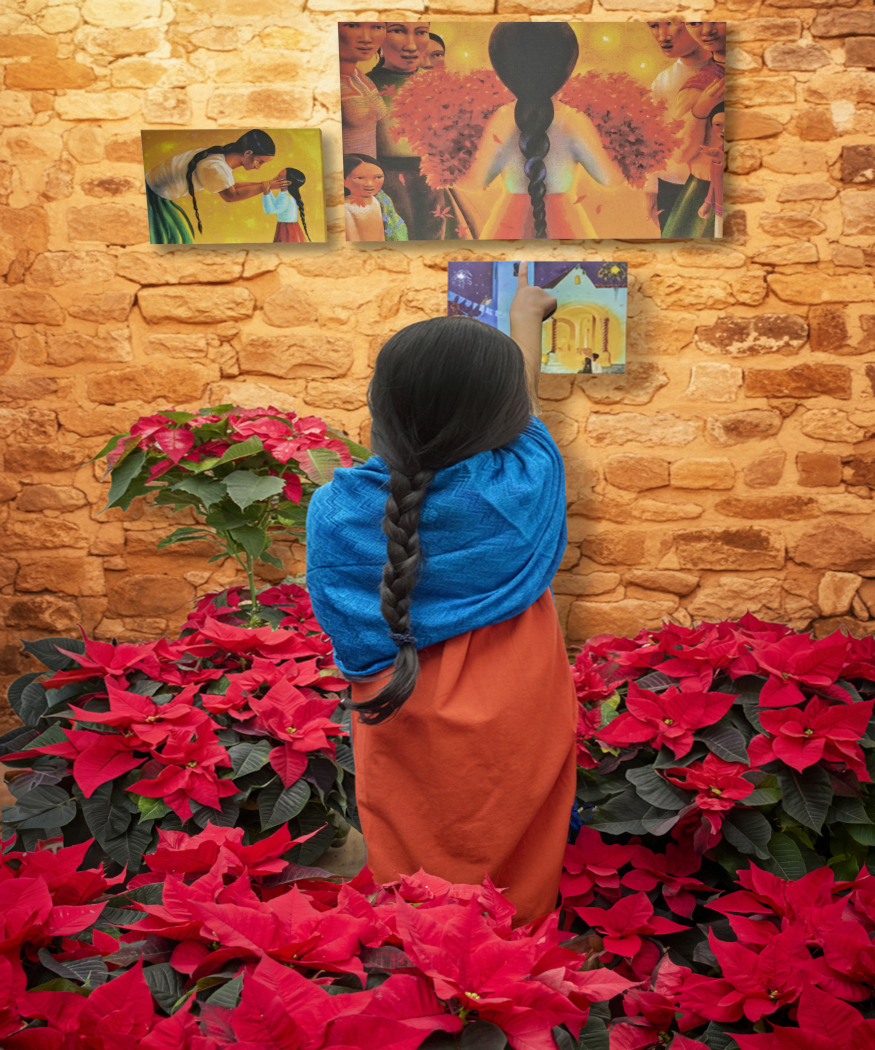
With its vibrant colours and eventful history, the poinsettia, which originates in Mexico, brings a touch of southern joie de vivre to the dark winter months. For centuries, this plant has been associated with legends, festive customs and traditions, from the Aztec Empire to the present day. At the same time, this versatile winter favourite provides inspiration for creative design ideas and craft projects. The experts at Stars for Europe (SfE) explore the poinsettia’s Mexican heritage and the legends surrounding it, offering festive decoration ideas with a Mexican feel.
From wild shrub to Aztec symbol
The ancestors of today’s poinsettia originated in Mexico. In the wild, it grows as a shrub that can reach several metres in height, distinguished by its narrow, typically carmine-red bracts.
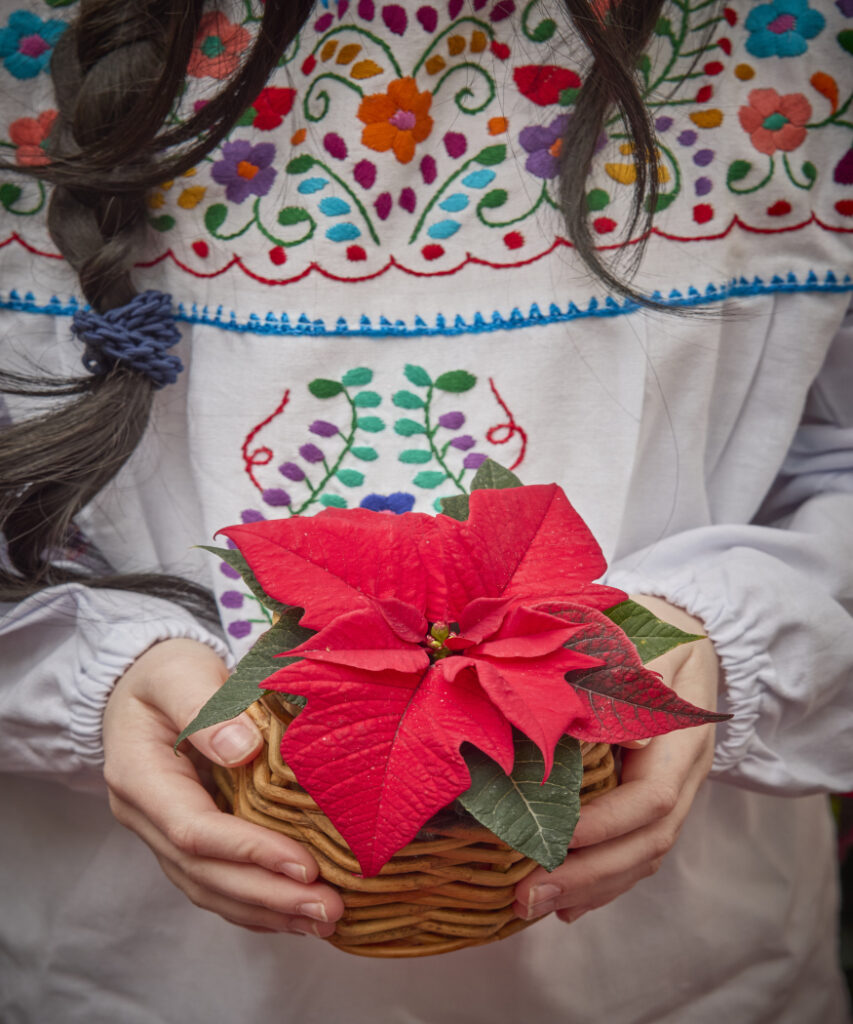
Even in the Aztec Empire, the poinsettia held special significance. Known as ‘cuitlaxochitl’, it symbolised purity and new life.
The Aztecs adorned their temples and gardens with this striking plant, extracted dyes from its bracts and used its milky sap as a remedy. Legends also surround the poinsettia.
According to one tale, the vibrant red of its bracts is said to be the result of drops of blood from an Aztec goddess who died of lovesickness.
So the poinsettia has been a symbolically rich plant since ancient times — long before it found its way to other parts of the world as a decorative winter plant.
The road to becoming a Christmas plant
Following the Spanish conquest, the poinsettia took on new significance during the Christianisation of Mexico. There, it became known as ‘Flor de Nochebuena’, or ‘Flower of the Holy Night/Christmas Eve Flower’, and became a staple of Christmas celebrations. According to tradition, Franciscan monks began decorating processions with the bright red plants as early as the 17th century. One well-known legend is that of Pepita, a poor girl who is said to have brought an unassuming plant as a gift to a nativity scene on Christmas Eve. According to the story, the plant began to bloom there and its star-shaped bracts turned a vibrant red – which is how it became a known as “The Cristmas Star”, the other name for a poinsettia.
From Mexico to the World
From a wild Mexican shrub, over time the poinsettia evolved into an internationally widespread Christmas plant. In the 19th century, it arrived in the USA, where it was cultivated in botanic gardens and then spread, particularly to the warmer regions of the country. In California, its branches were marketed as Christmas decor from an early stage. It was only through successful breeding in the early 20th century that the poinsettia became a compact houseplant, finding its way into living rooms worldwide. Since then, it has become an integral part of festive decorations in many homes, bringing a touch of Mexican spirit to the world.
Festive decorating with a Mexican feel
With their vibrant colours and striking presence, poinsettias are ideal for bringing a touch of Mexico to your home. Whether used as a focal point on a sideboard or coffee table, as an opulent Christmas tree-shaped centrepiece, or as festive table decorations, these winter bloomers can be displayed in exciting and versatile ways. Combined with succulents, textured containers, graphic patterns or handcrafted accessories, they create decorations offering a modern interpretation of the plant’s Mexican origins.
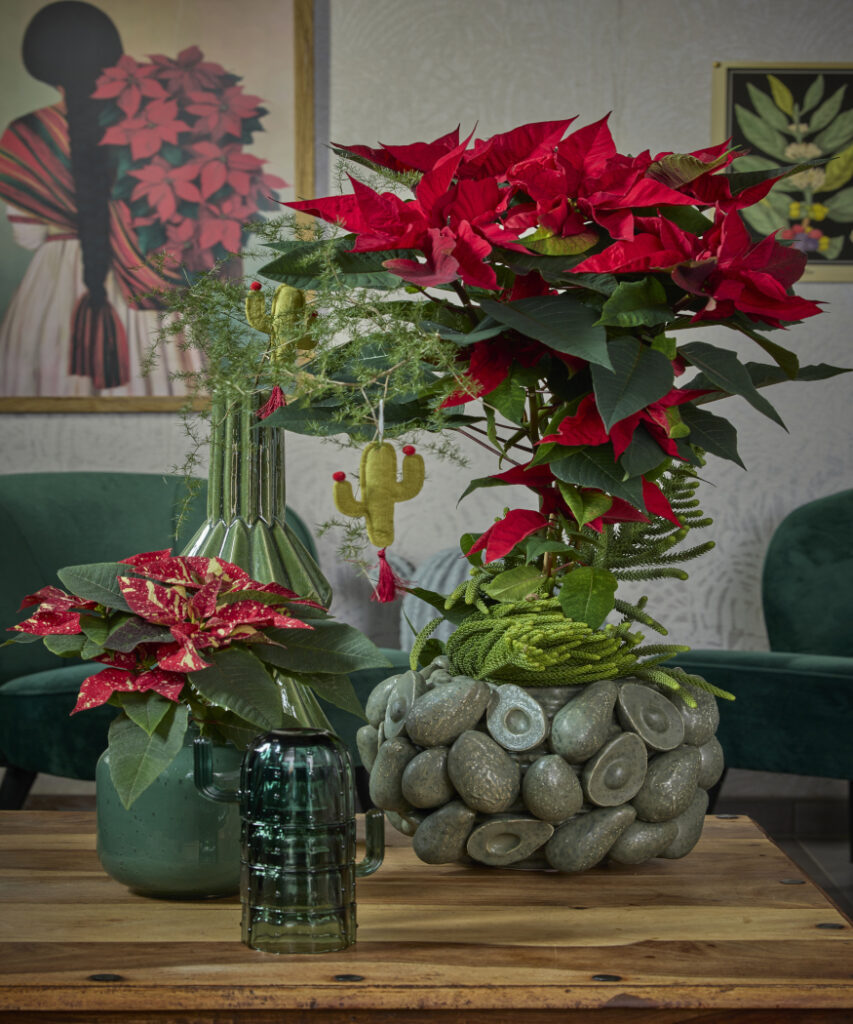
Left: In an avocado covered planter, this bright red standard poinsettia steals the show. The avocado motifs and handcrafted cactus ornaments allude to this winter favourite’s Mexican heritage. Norfolk Island Pine branches (Araucaria heterophylla) create exciting contrasts with their unusual texture, underscoring the arrangement’s exotic, contemporary look.
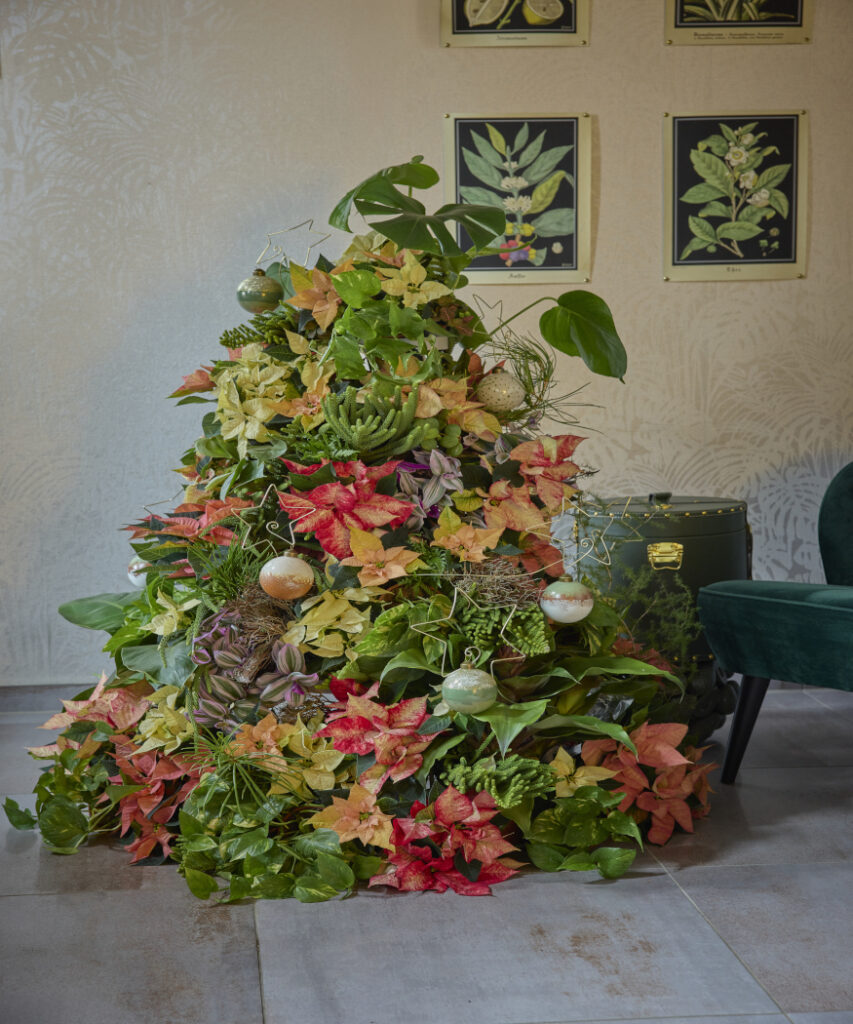
Right: Poinsettias in shades of red, apricot and cream, along with tropical plants, have been used to create an extravagant Christmas tree-shaped plant sculpture, supported by a metal pyramid stand. This vibrant combination of warm colours, contrasting leaf textures and cascading plants evokes the lush vegetation of Central America, offering a contemporary take on the traditional Christmas tree
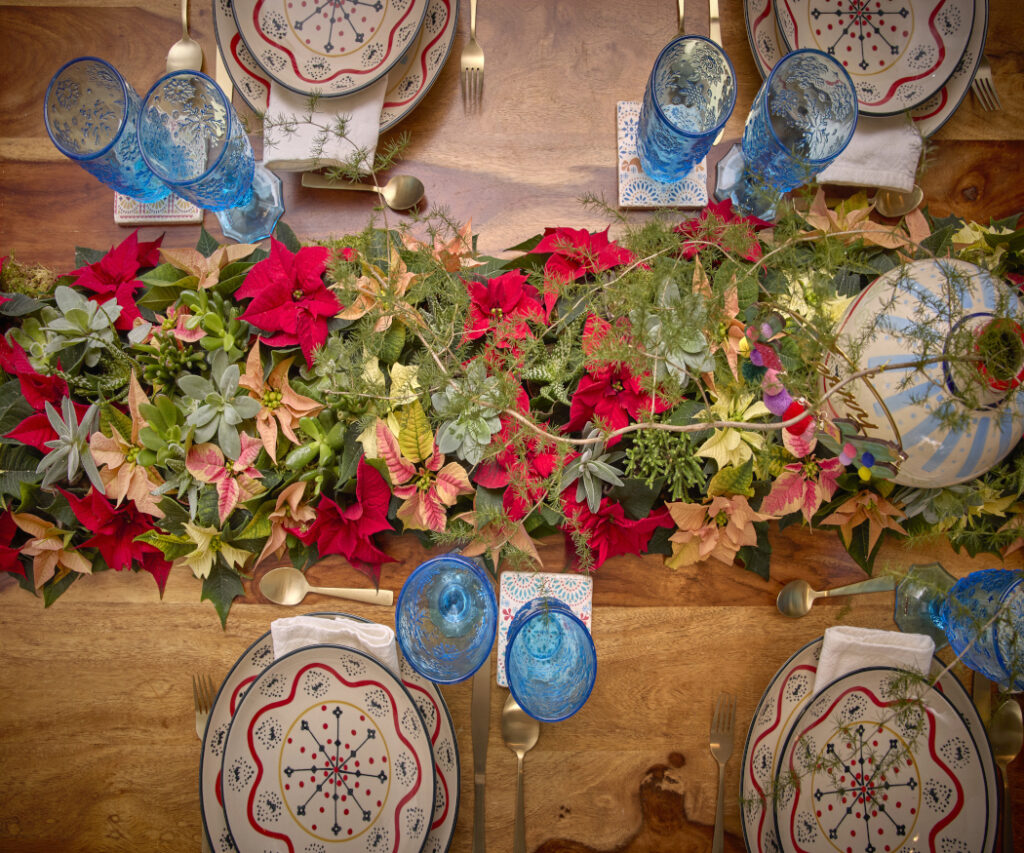
Above: A garland of mini poinsettias and succulents winds its way across the table like a blooming ribbon. Colourful decorative elements, such as stylised cacti and handcrafted items, accentuate the vibrant colours and create a festive atmosphere with a Mexican feel.
Tip: You can place the plants onto the table on a narrow plastic tray, as shown here, but for longer-lasting blooms, we recommend arranging them in shallow bowls or rectangular trays, as these make watering easier.
Craft project: Three Kings poinsettia planters
In Mexico, Christmas doesn’t simply end after Christmas Day – it continues with the joyful celebration of Epiphany on 6 January. Children especially look forward to receiving little gifts and festive surprises on this day. In keeping with this tradition, poinsettias also feature in creative decorations.
This craft project transforms simple terracotta pots into figures of the Three Wise Men using just paint, your imagination and vibrant mini poinsettias. This playful reinterpretation of the Christmas story is quick and easy to create.
To make each of the three kings, you will need three small and two mini terracotta pots and two wooden beads. You will also need fine paintbrushes, acrylic paints, a black pen, a gold pen and a hot glue gun with glue sticks.
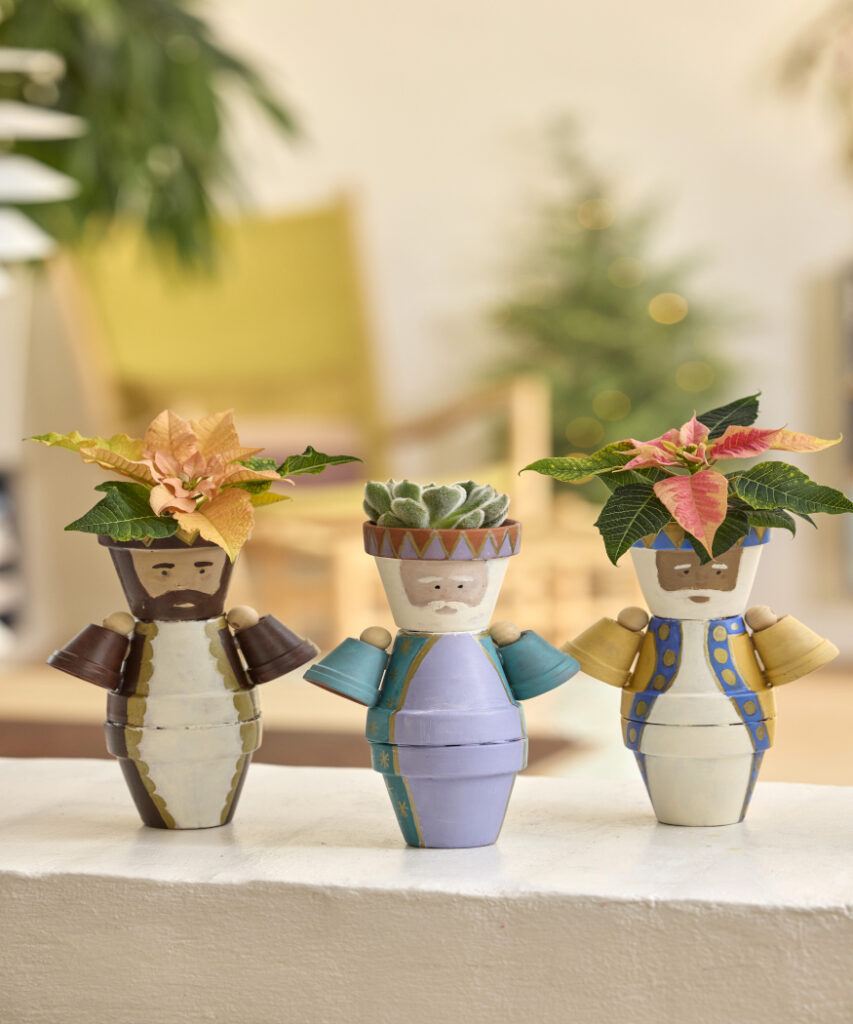
A mini poinsettia serves as the festive finishing touch for each figure – or you can combine two minis with a little succulent.
Step 1: If necessary, thoroughly clean the terracotta pots and leave them to dry. Then, stack the small pots on top of each other to check the fit. To create the body, align two pots with their openings facing each other, leaving the pot for the head with the opening at the top. This will help you plan the transition of the garments and decorative details a cross the pots. Now sketch the face and garments on with a black pen.
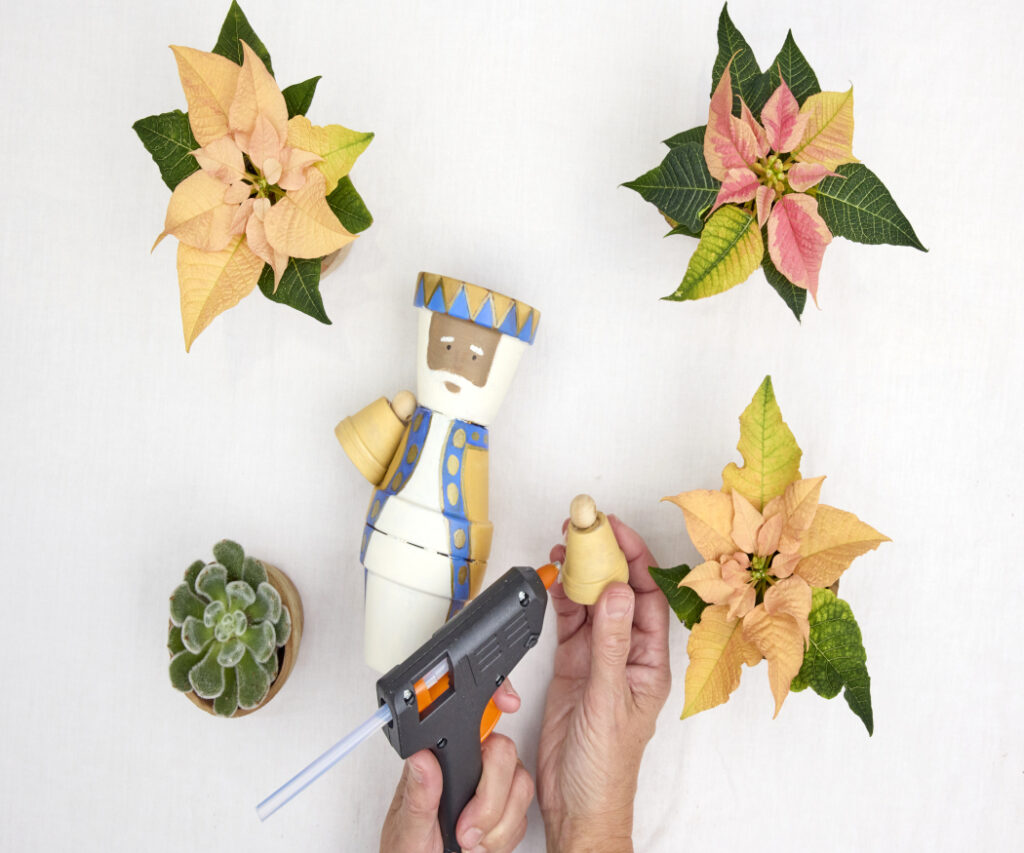
Step 2: Now it’s time to add colour. Paint your shapes on with acrylic paints and leave them to dry completely. Then, carefully glue the pots together with hot glue. Make sure the lines of the clothes match up across the pots.
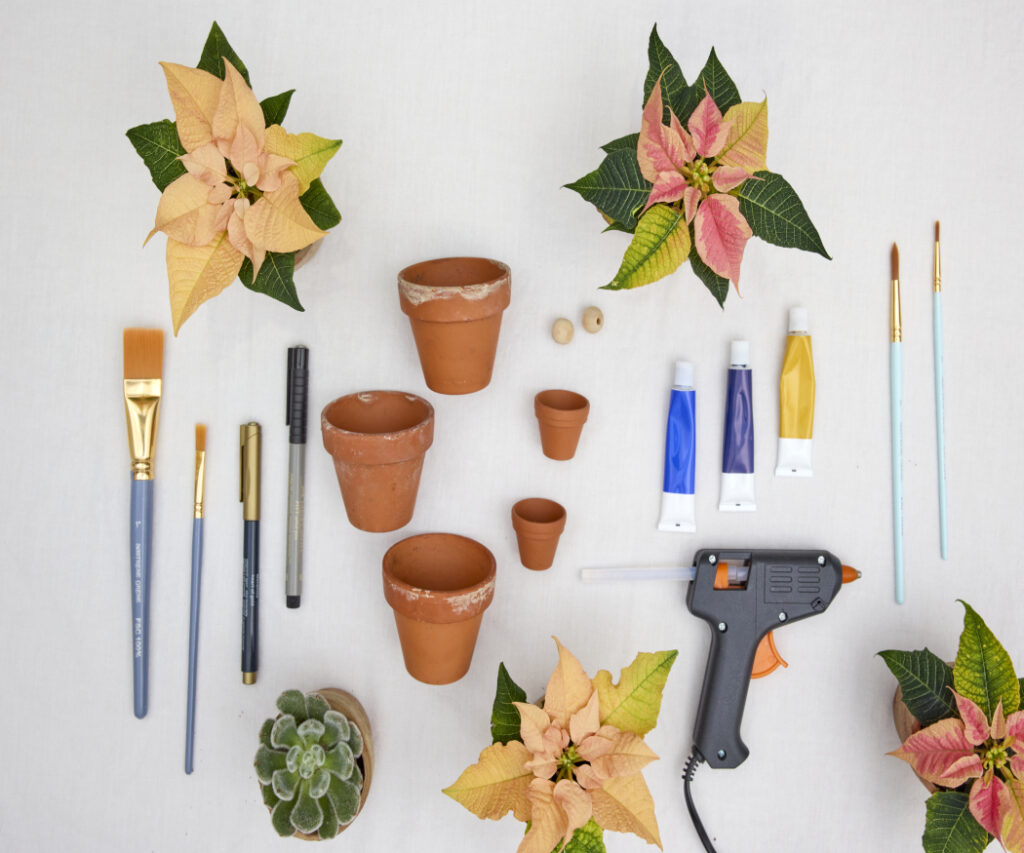
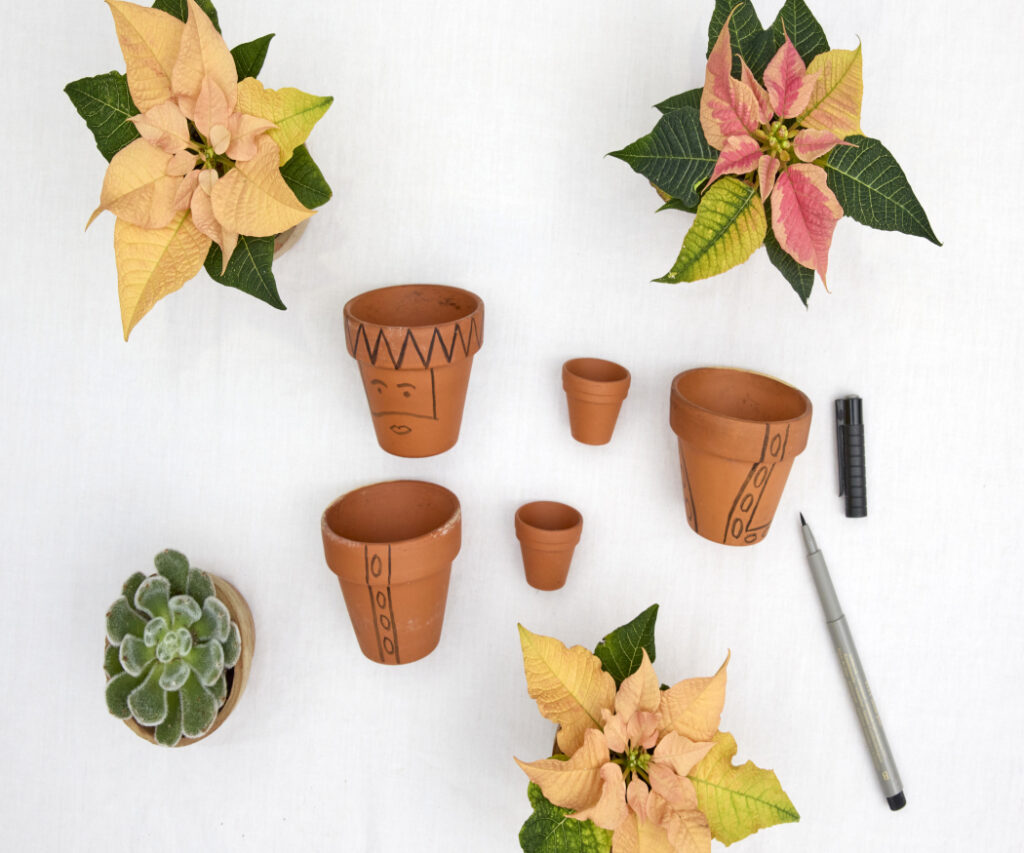
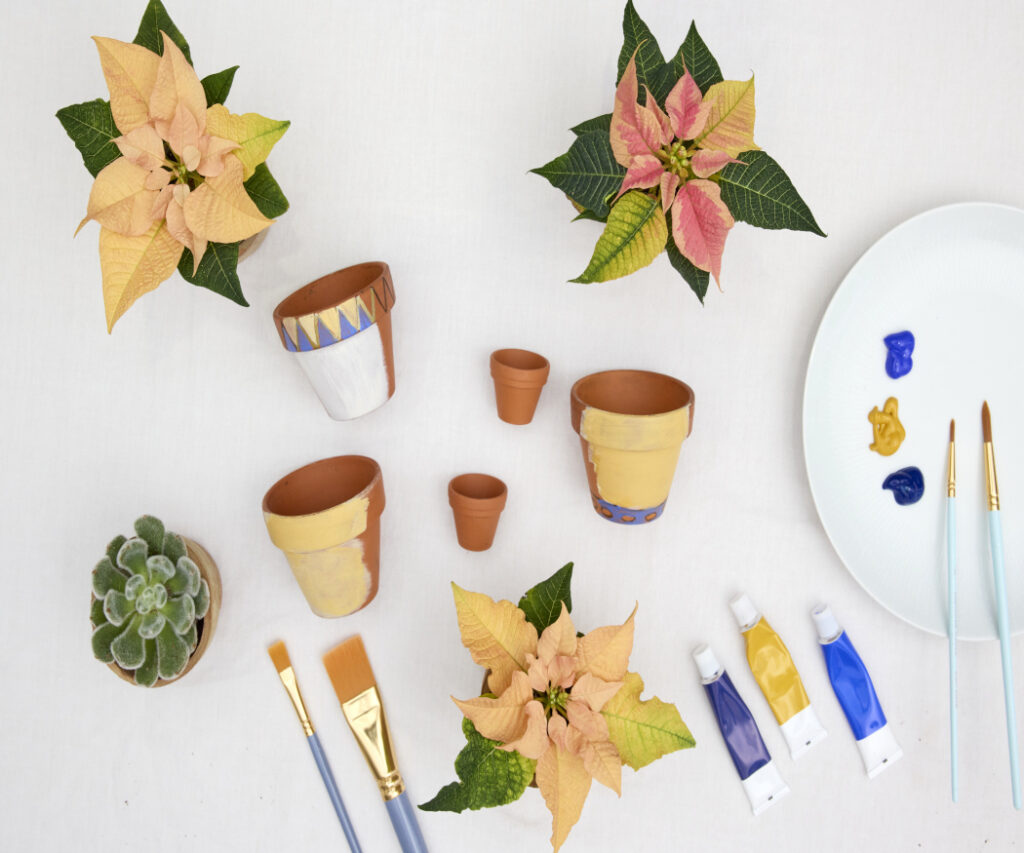
Step 3: To make the arms, first glue a wooden bead to the base of each mini terracotta pot. Next, attach these pieces to the sides of the body with hot glue – the beads will form the figures’ shoulders.
Step 4: For the finishing touch, use the gold pen to draw fine outlines and decorative details.
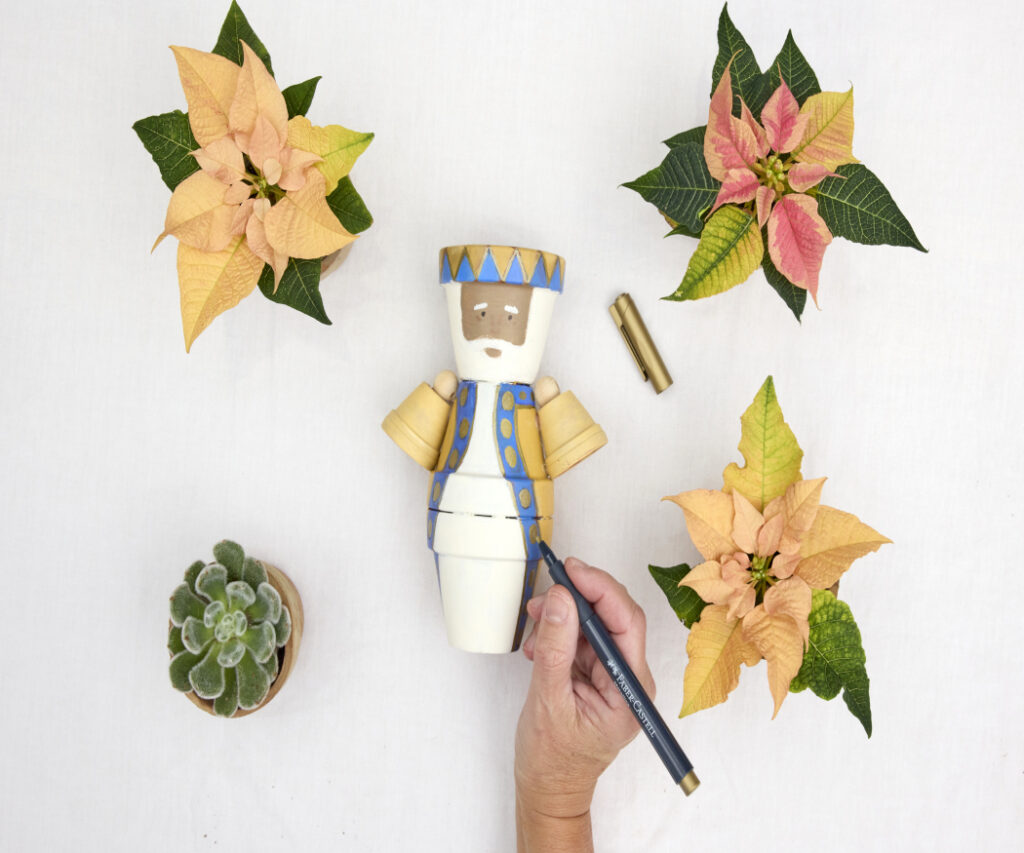
Step 5: Finally, seal the drainage holes of the top pots with a little glue and insert the mini poinsettias/succulent. Water the plants sparingly. Ideally, water your mini poinsettias daily in small doses to prevent waterlogging. Place your finished arrangements in a bright location.